The US Staffing Industry Trends for 2026: Stabilization, AI, And Sector Demand. What Firms Need to Know?


Following the volatility of 2025, the US staffing market is set to have a stabilizing 2026. Not a boom and not a bust, it will be a year of rebalancing, achieving modest growth of approximately 2% to $183.3 billion, witnessing more predictable hiring cycles, and driven by efficiency gains. Factors fuelling this growth are AI adoption in hiring (84% of hiring processes now employ AI) and selective demand in resilient sectors.
For staffing firms, this implies an alleviation of severe fluctuations in demand, but a simultaneous elevation in expectations for consistency, quality, explainable decisions, and tech integration. Companies that adapt in sensible ways with structured processes, AI infrastructure, and skills-based pipelines will grow steadily, others will feel constrained despite stable volume.
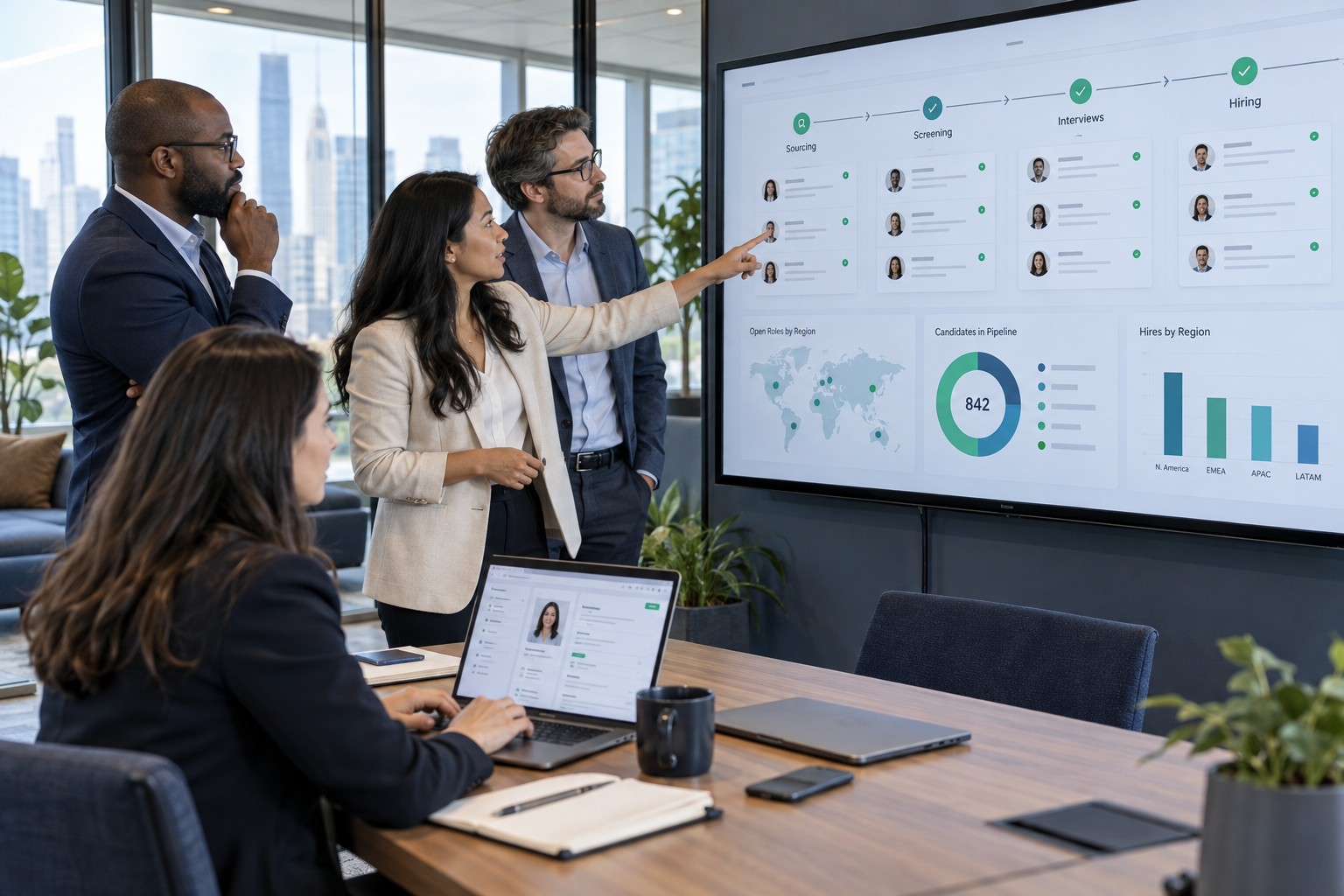
Picture of US staffing market in 2026
What Makes 2026 Different?
In 2025, hiring was marked by freezes and spikes. By 2026, the cycles are going to be more predictable: with lesser shocks and better alignment between candidates and employers. Most (61%) thought time-to-fill would remain stable, with some improvements in efficient screening.
These days, clients are more selective. They care more about being right than being fast. Quality, compliance, retention, and skills validation are now priority factors. This uncovers operational gaps: manual screening isn’t scalable while uneven evaluation causes friction.
Time-to-Fill Trends in 2026
Data shows stabilization, not dramatic drops:
(Source: SIA forecasts)
Where Demand Is Concentrated in 2026
Demand isn't uniform: it's strongest in structurally resilient sectors:
Across sectors, clients want clarity, defensibility, and skills-based matching, not just candidates. Flexibility (hybrid, fractional) is a dealbreaker for 70% of talent.
Top In-Demand Skills for Staffing Placements in 2026
Staffing firms that build pipelines around these high-growth skills will capture high-margin placements amid talent shortages.
The Rise of AI in Staffing Operations: Opportunity & Compliance
AI adoption is exploding (84% of processes; 52% plan agentic AI). Leading firms use it as infrastructure for consistency and scale, while addressing risks like bias and new regulations.
What This Changes for Staffing Firms
Volatility hid weaknesses; stabilization reveals them:
- Manual processes don't scale.
- Inconsistent screening causes client friction.
- Burnout resurfaces with stable volumes.
Speed alone isn't enough, decision quality, AI support, and skills focus win deals.
How High-Performing Firms Are Adapting
Leading firms are shifting to scalable, consistent models:
When Recruitment Smart Comes In
Recruitment Smart solves these challenges through structured screening and consistency, minimizing manual work, offering enhanced shortlists, and enabling AI-augmented (not AI-replaced) decisions, helping firms build trust and scale in a stable AI-dominated market.
It is important to adapt now
In a well-supplied US market, we reward clean, efficient, tech-enabled operations with 2026. Companies that reshape processes, prioritize in-demand skills and wisely use AI are on target for steady growth.
Frequently asked questions about 2026 US staffing trends
- What will the US staffing industry look like in 2026?
SIA projects modest growth of 2% to $183.3 billion for global semiconductor market in 2023
- How Artificial Intelligence Will Change Recruiting for Staffing Firms?
With an adoption of 84%, agentic AI manages 80% of transactional work, allowing recruiters to focus on relationships. More importantly, however, adequate bias audits and compliance are essential.
- What sectors are predicted to have the most growth?
The demands for structures include healthcare, the rebound of industrial trades, a selective IT tech powered by AI among others.
- Which skills should recruiters build pipelines for?
According to Korn Ferry and BLS AI/ML cybersecurity data analytics robotics soft skills like critical thinking
- How can companies get ready for skills-based hiring?
Make the shift from validation based on degree certificate to validation based on competency. Partner with training providers and use AI-based assessments to access 19x larger pools.
Prepared to transform for the US staffing trends of 2026? Schedule a demo with us at Recruitment Smart to see how the best in business is winning with structured, AI-supported hiring.
%20(1).png)